
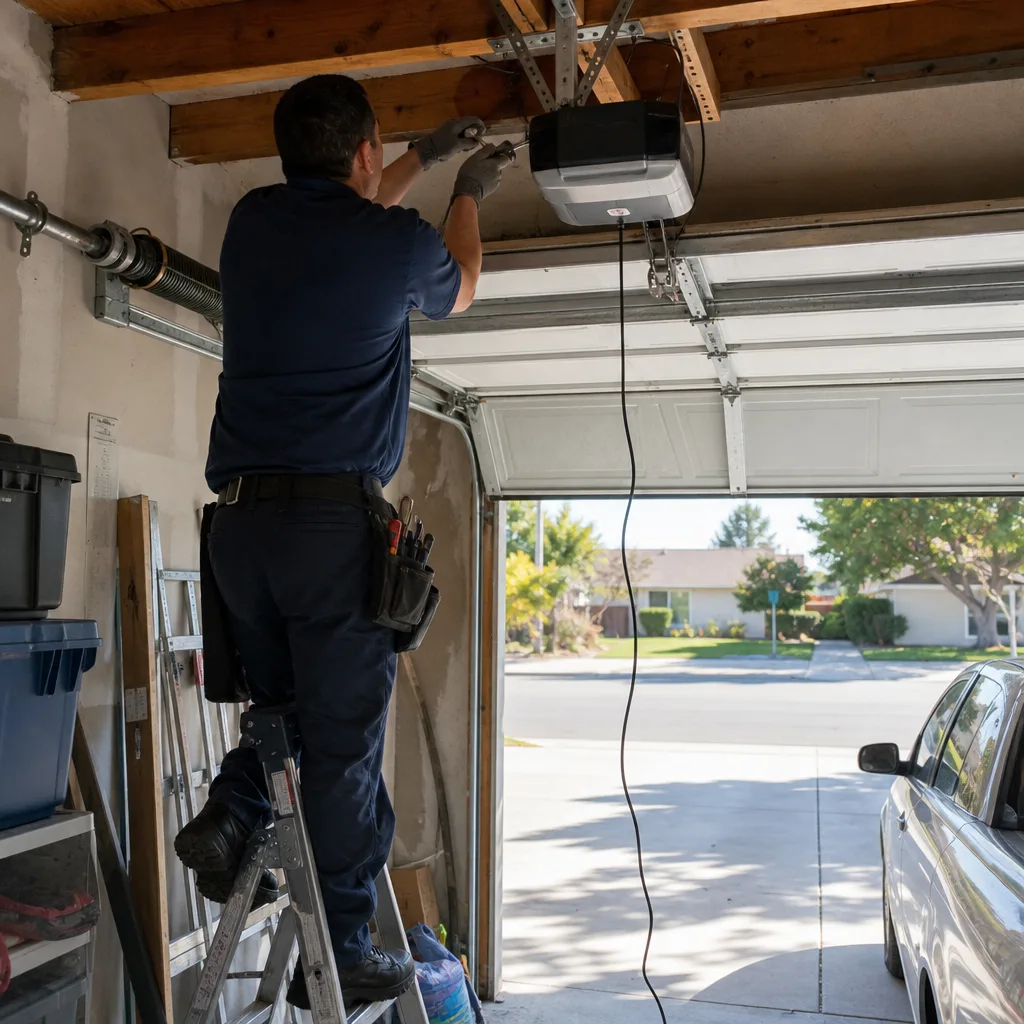
Last updated November 4, 2026
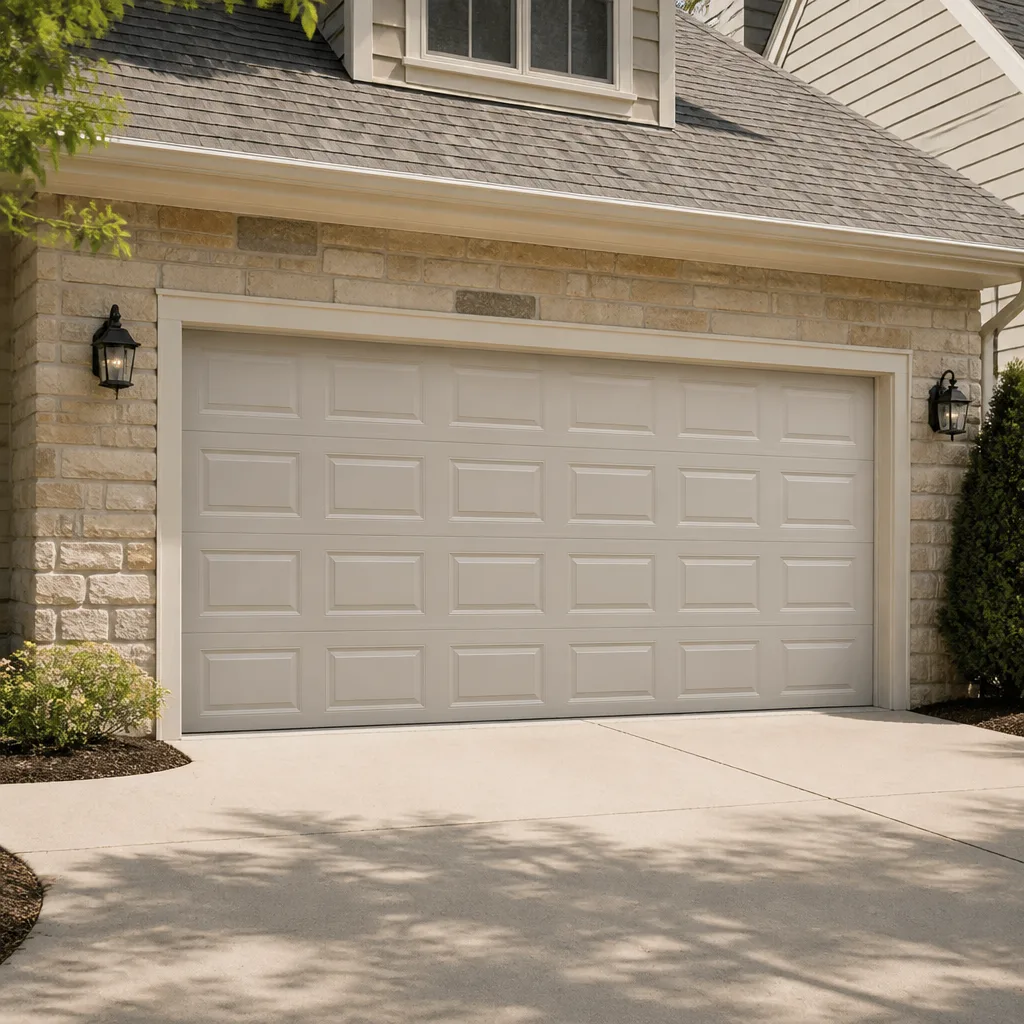 Raised-panel steel
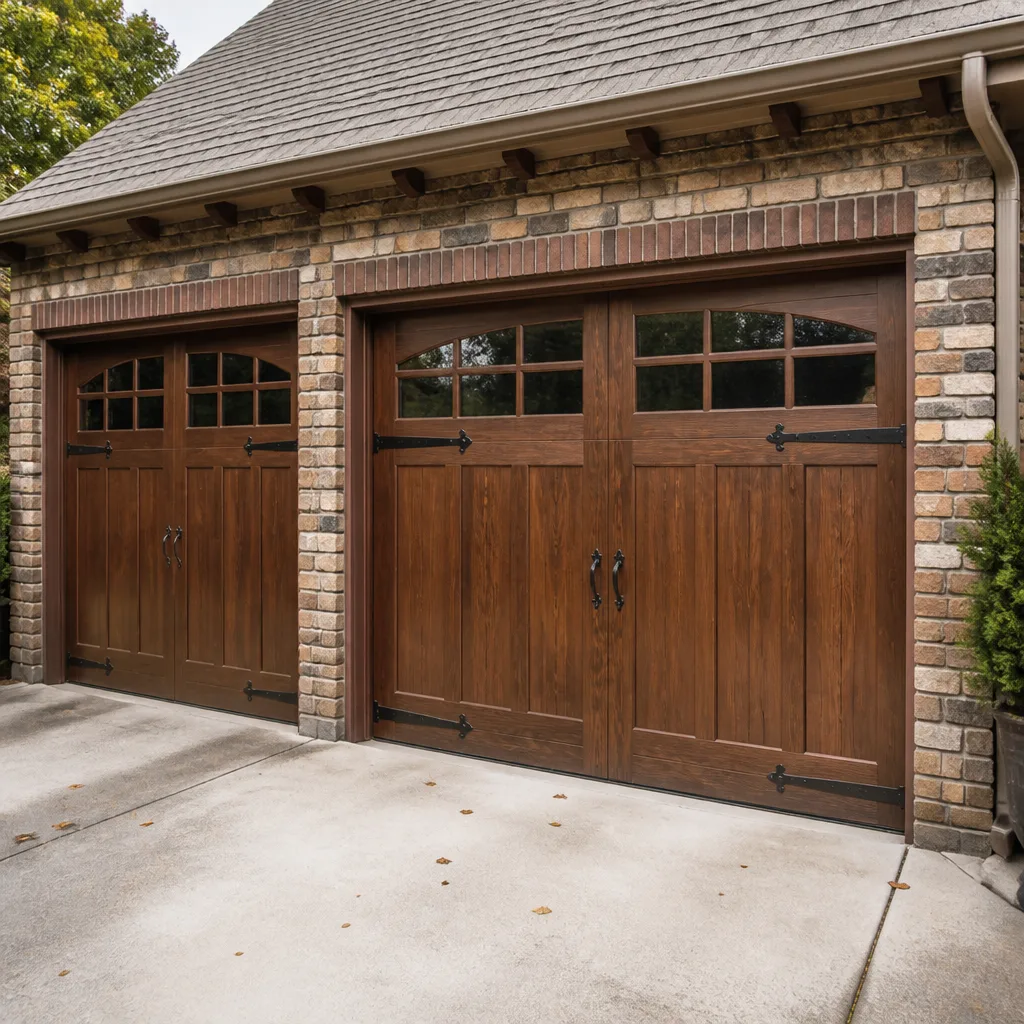 Carriage house
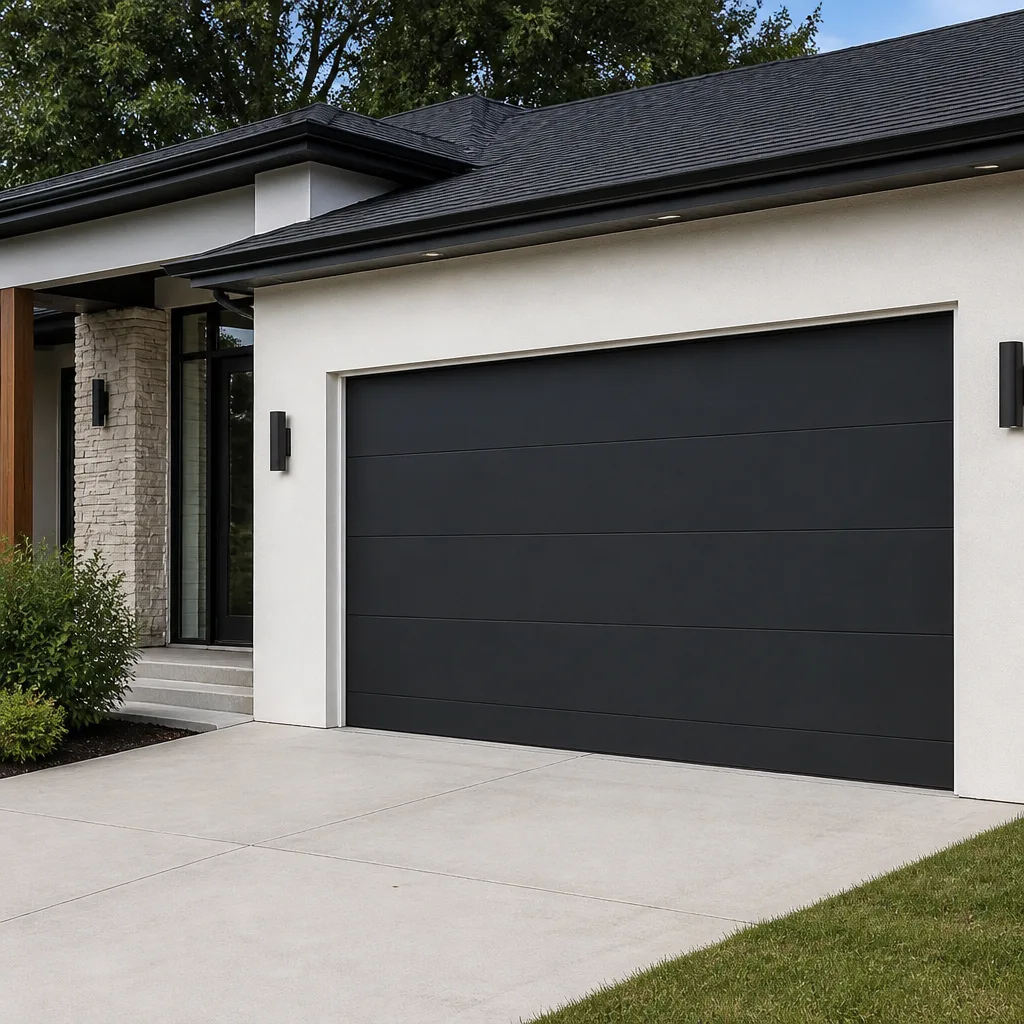 Modern flush
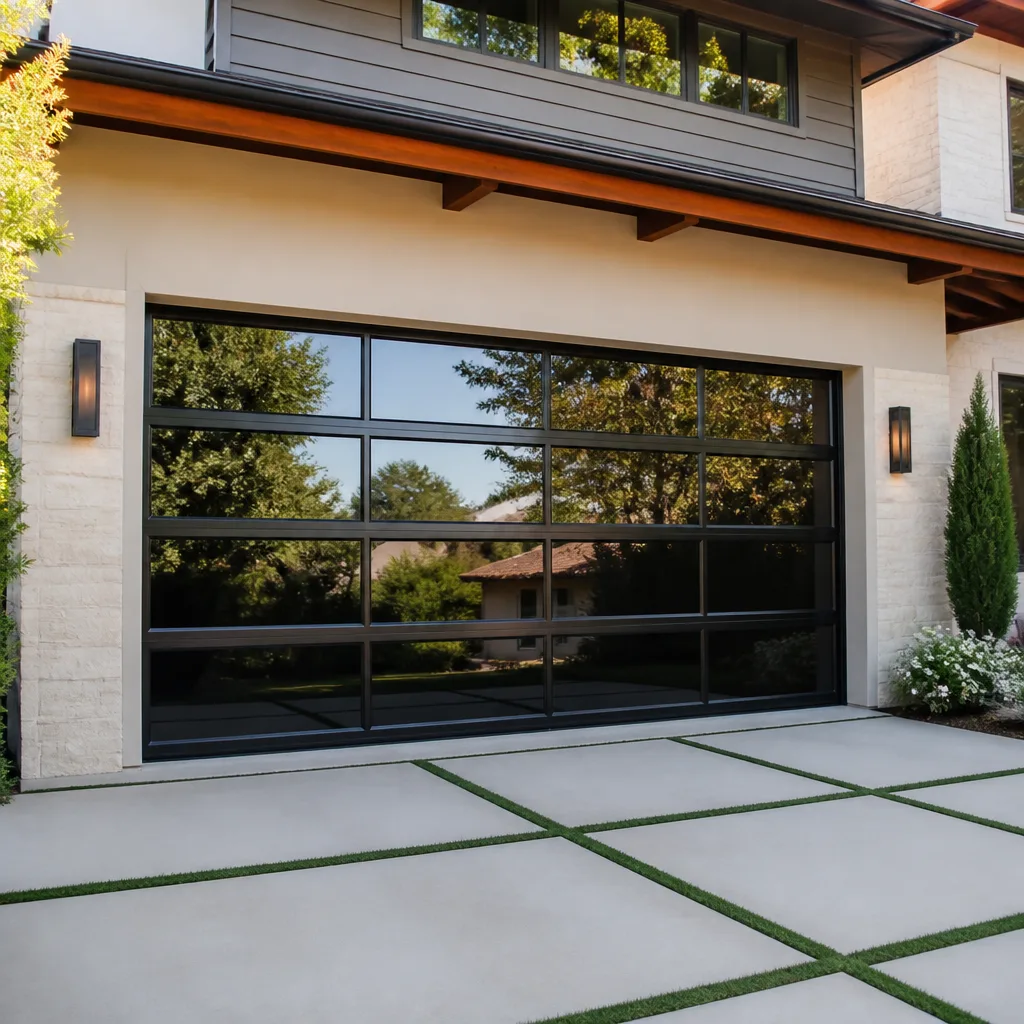 Full-view glass
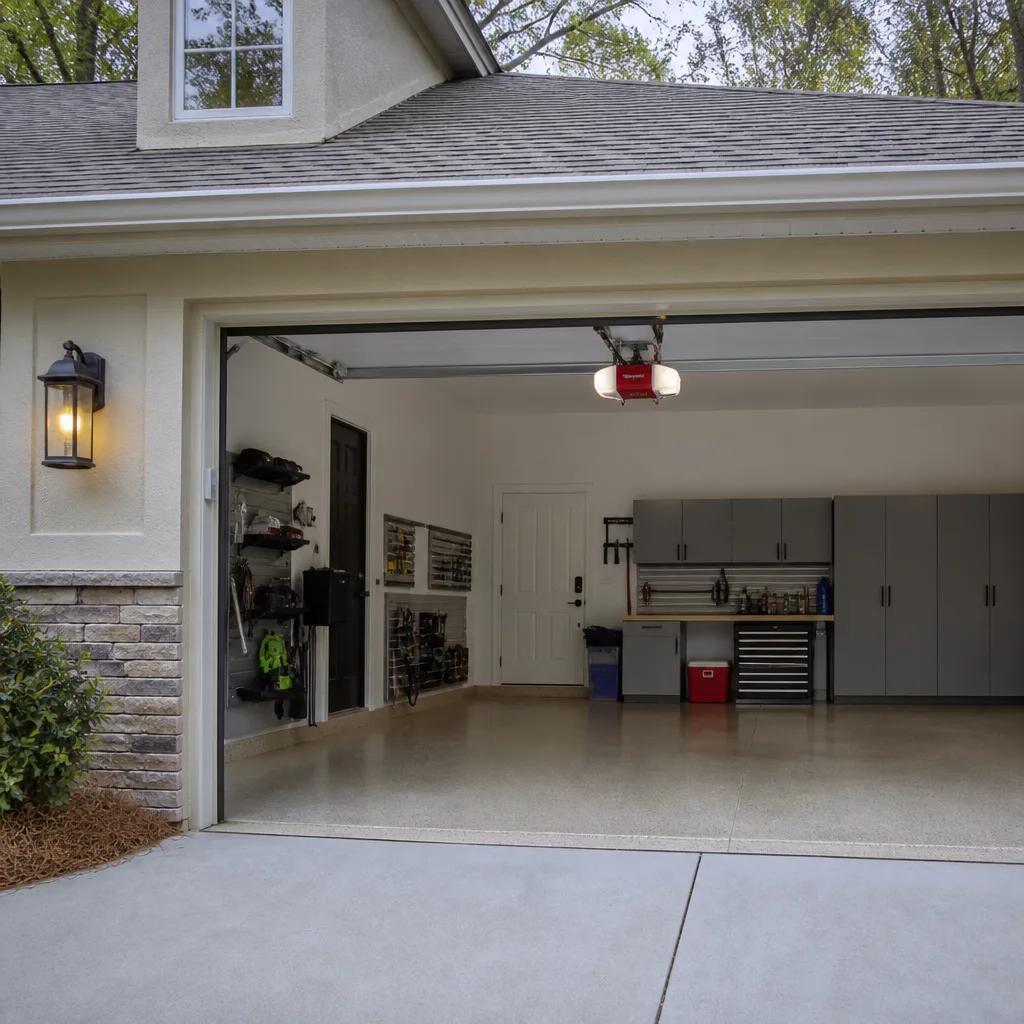 LiftMaster openers
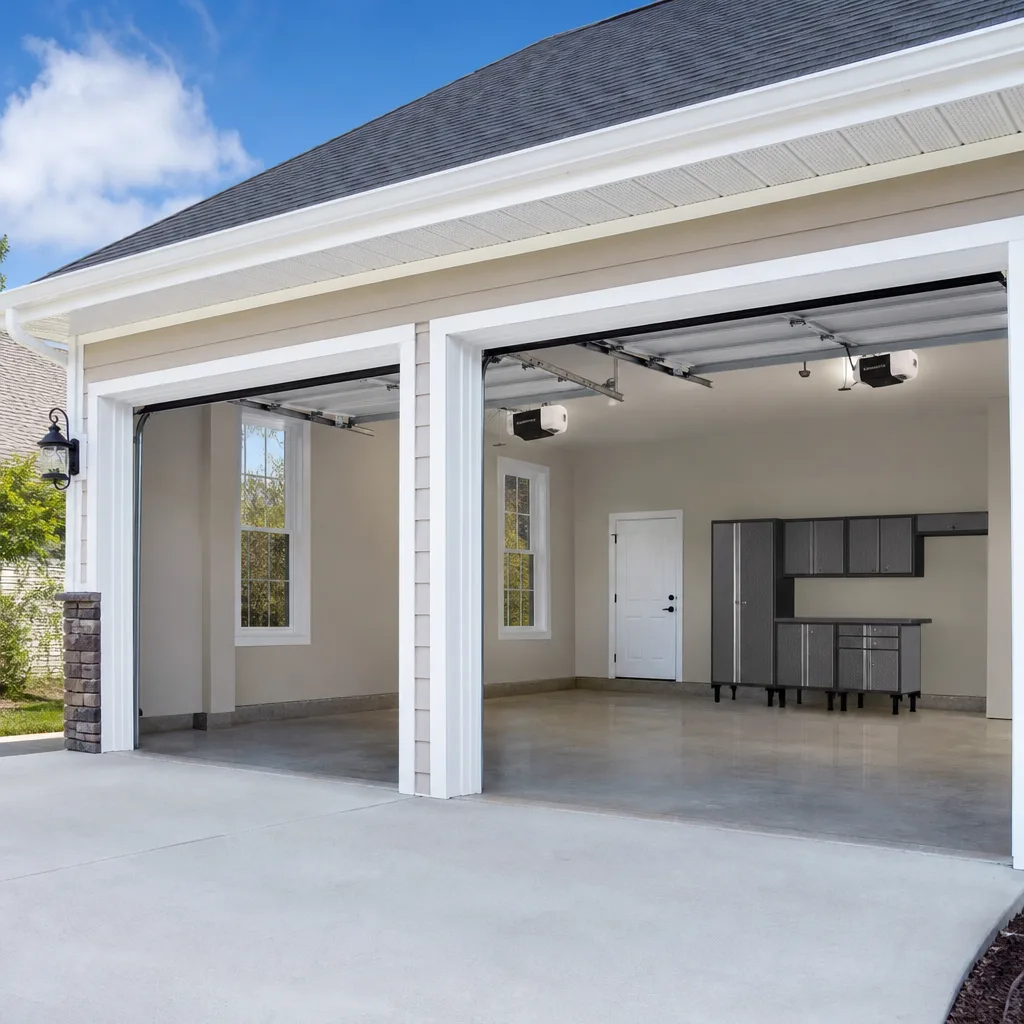 Chamberlain openers
Full 25-point door and opener safety check with every visit - springs, cables, rollers, tracks, and your LiftMaster or Chamberlain opener included
You get a price before we start. It does not change when the truck arrives.
Get your free estimateThe Complete Guide to Garage Doors in Lakewood
Most Lakewood homes were built between 1950 and 1965, and the single-car garage openings on those tract houses rarely match the standard door widths sold online today. Order a door based on what a website calls “standard” and you may find the header clearance is wrong, the track radius doesn’t fit, or your HOA rejects the color before the box is even opened. This guide walks through the actual decisions Lakewood homeowners face: sizing, materials, opener compatibility, permits, and the repair-versus-replace math that applies to this specific housing stock.
Quick Answer
A garage door guide for Lakewood, CA starts with measuring your existing rough opening rather than trusting a standard size, because the city’s postwar tract homes often need low-headroom hardware or custom-width panels. Material choice should account for Lakewood’s mild but sunny climate, and opener selection depends on what’s already wired in your attached garage. Most systems can be repaired in one visit, and a full replacement typically requires a permit pulled through City of Lakewood or LA County, depending on jurisdiction.
Styles & brands we work with
- Raised-panel steel
- Carriage house
- Modern flush
- Full-view glass
- LiftMaster openers
- Chamberlain openers
Table of Contents
- Why Lakewood’s Postwar Housing Stock Changes Everything
- How to Measure a Garage Door Opening the Right Way
- Material Choices That Work in Lakewood’s Climate
- HOA Rules and What They Mean for Your Door
- Garage Door Opener Compatibility by Brand
- Permits: City of Lakewood vs. LA County Jurisdiction
- Repair or Replace: The Honest Calculation
- Common Mistakes to Avoid
Why Lakewood’s Postwar Housing Stock Changes Everything
Lakewood was built as a planned community, and the original tract homes from the 1950s and early 1960s share a common framing style: attached garages with carport-like proportions, shallow ceilings above the door opening, and headers that sit closer to the roofline than modern construction would allow. For a garage door, that means one thing: headroom. A standard torsion spring setup needs about 12 inches of clearance between the top of the opening and the ceiling. Many Lakewood garages have 8 to 10 inches. That changes what hardware fits.
Low-headroom track is the usual answer. It uses a different track profile and spring configuration to pull the door up tighter against the ceiling. If someone quotes you a standard door without asking about headroom, they haven’t seen a Lakewood garage. In our experience, about a third of the older homes we see need low-headroom hardware or a modified track setup, not just a new door panel.
The second issue is width. Original single-car openings on these tract homes often run 8 feet wide, sometimes a few inches over or under. Modern “standard” single doors are usually 9 feet wide. That inch of difference means the opening gets reframed or the door gets ordered custom. garage door repair on an older Lakewood home frequently involves matching hardware to an off-standard opening, not swapping a same-size panel.
The third factor is the attached garage itself. Most Lakewood homes have the garage built into the house footprint, sharing a wall with the living space. That matters for fire separation requirements, which we’ll cover in the permit section. It also means noise travels. A metal door on a shared wall echoes differently than a door on a detached garage.
How to Measure a Garage Door Opening the Right Way
You need four measurements before any meaningful conversation about a new door can happen: width, height, side room, and headroom. Here’s the order that catches the problems.
- Measure the rough opening width at the widest point, typically from stud to stud, not from trim to trim. Trim hides gaps, and gaps are where a door binds.
- Measure the height from the concrete floor to the underside of the header. Concrete settles over time, so take this measurement at both corners and in the middle. Use the smallest number.
- Measure the side room, which is the space between the edge of the opening and the nearest wall on each side. A torsion spring system needs about 3.5 to 4 inches per side. Less than that and you’re looking at an extension spring conversion or a different track style.
- Measure the headroom from the top of the opening to the ceiling joist. Anything under 12 inches signals low-headroom hardware. Anything under 8 inches is a real constraint that needs a technician to evaluate in person.
If any of those numbers falls outside the modern common range, do not order a door online. A door that arrives as a standard kit will not go in cleanly. In Lakewood, where the 1950-to-1965 building boom dominates the housing stock, nonstandard numbers are common rather than rare.
Material Choices That Work in Lakewood’s Climate
Lakewood’s weather is mild, but the sun is persistent. August and September bring weeks of direct afternoon exposure on west-facing garage doors, and that’s the condition that damages paint and warps cheaper wood sections. Hail is uncommon here, so impact damage mostly comes from everyday bumps: a car tap, a basketball, a wind-blown trash can. The material choice should follow from what the door actually faces.
Steel
Steel is the most common door in Lakewood and for good reason. It holds up to sun, needs little maintenance, and comes in the widest range of panel styles. Thicker steel skins, 24-gauge rather than 27-gauge, resist dents better. Look for a thermally broken section if the garage shares a wall with the house. The insulation value matters less for temperature than for stiffness and noise.
Aluminum with Glass
Modern aluminum full-view doors look sharp, but they’re a specific choice for a specific house. On a 1950s Lakewood ranch, an aluminum and glass door can look out of place, and the HOA may have a say. They’re lighter than steel, which is easier on springs, but they show every fingerprint and every water spot from the sprinklers.
Vinyl
Vinyl doesn’t dent the way steel does, and it won’t rust. That said, vinyl selections are narrower, the color palette is limited, and a vinyl door can fade unevenly under sustained sun. For a Lakewood home with kids playing in the driveway, the dent resistance is the selling point.
Wood
Wood is the least practical material for most Lakewood homes. It needs refinishing, it moves with humidity, and it’s heavy, which puts more stress on the spring system. There are Lakewood neighborhoods where a wood carriage door fits the original architectural character, and Clopay and Amarr both make high-quality wood lines. But the maintenance is real, and the HOA won’t maintain it for you.
HOA Rules and What They Mean for Your Door
Lakewood has many HOA-governed streets, and garage door color and material restrictions are among the most commonly enforced rules. Before you select a panel color or consider a full-view glass insert, check your governing documents. Some Lakewood HOAs maintain an approved color palette tied to the original tract-home design. Others restrict materials. A few require that the garage door match the front door or the fascia color. Violations are usually handled with a notice and a deadline, not a fine, but the deadline becomes your problem if the door is already installed.
The practical move is to call the management company and ask for the architectural review form before you sign a contract. Many Lakewood HOAs process garage door approvals quickly because the forms are standardized. If you work with a company that installs in Lakewood, the team can usually supply the panel style, material spec, and color code the form asks for. Clopay and Amarr both publish color codes that match their stock finishes, which makes the form easier.
Garage Door Opener Compatibility by Brand
Lakewood garages have a mix of opener generations in service. The original 1960s and 1970s homes often still have older chain-drive units, many of them Craftsman or Genie. Newer smart-home setups tend toward LiftMaster and Chamberlain, which share a parent company and use compatible accessories. Wayne Dalton and Raynor doors are also common, particularly on newer or custom homes. Here’s how compatibility breaks down by what you’re trying to do.
Replacing an opener while keeping the door
If the door itself is sound, an opener swap is usually straightforward. Modern LiftMaster and Chamberlain motors work with most standard sectional doors regardless of door brand. The compatibility question is about the mounting hardware and the drive force. An old, heavy wood door from Amarr or Wayne Dalton needs a motor rated for that weight. A lightweight steel door does not.
Upgrading to a smart opener
The two dominant smart integration lines are LiftMaster and Chamberlain, and both support app control through MyQ-enabled hardware. If the homeowner manages access through a phone app or home automation system, those are the two brands we most often install. Genie also makes a smart line, but it’s less common in Lakewood’s existing installs.
Keeping the opener and replacing the door
This is where brand mix matters. If you’re replacing a door but keeping an older opener, the new door’s weight and balance must sit within the opener’s pulling capacity. We’ve seen old Chamberlain motors rated for an 8-foot aluminum door get paired with a new insulated steel door and fail within a season. garage door opener repair is often avoidable if the door weight is matched to the motor at the point of installation.
Parts and remotes
Craftsman openers are still common in Lakewood garages, and remotes and safety sensors remain available even though Sears no longer operates as it once did. Wayne Dalton’s TorqueMaster spring line is a particular quirk: the springs live inside a tube rather than on a standard torsion bar, which changes how a repair is done. Raynor doors use durable hardware that often outlasts the panels, so hardware salvage is sometimes possible.
The practical point is this: no single brand dominates Lakewood’s housing stock, so a brand-agnostic approach is the only one that makes sense. Garage Door Service Lakewood is certified to work across eight major garage door brands: LiftMaster, Chamberlain, Genie, Clopay, Amarr, Wayne Dalton, Craftsman, and Raynor. That breadth matters when the door in front of you was installed before the internet existed.
Permits: City of Lakewood vs. LA County Jurisdiction
Lakewood splits into two permit jurisdictions. Most of the city falls under City of Lakewood building regulations, but unincorporated pockets fall under LA County Department of Building and Safety. The process differs enough that it’s worth checking which one governs your address before you start a garage door replacement.
In both jurisdictions, a like-for-like panel replacement that doesn’t alter the opening usually does not trigger a permit. A door replacement that changes the opening size, moves framing, or alters the header always does. If you’re widening an 8-foot opening to fit a modern 9-foot door, that’s a structural change, and the permit process includes a plan check in both systems.
Attached garages in Lakewood also have fire separation rules, because the garage shares a wall or ceiling with living space. The door itself isn’t the fire-rated assembly, but the wall around it and the door frame are. When we replace a door on an attached garage, we check the perimeter seals and the frame condition as part of the job. If the frame has gaps or drywall damage around the opening, that’s the time to fix it, because the fire separation works only if the assembly is continuous. Ask the city’s building department about the specific code section for fire-rated separation in attached garages.
The practical approach: ask your contractor which jurisdiction applies and whether the proposed work needs a permit. A reputable company will know the answer for your block in Lakewood without guessing. If the answer is vague, call the city or county directly. The permit counter can confirm jurisdiction by address in a five-minute call.
Repair or Replace: The Honest Calculation
The repair-versus-replace decision should turn on three factors, not on what a salesperson wants to sell. Here’s the calculation as we actually apply it in Lakewood homes.
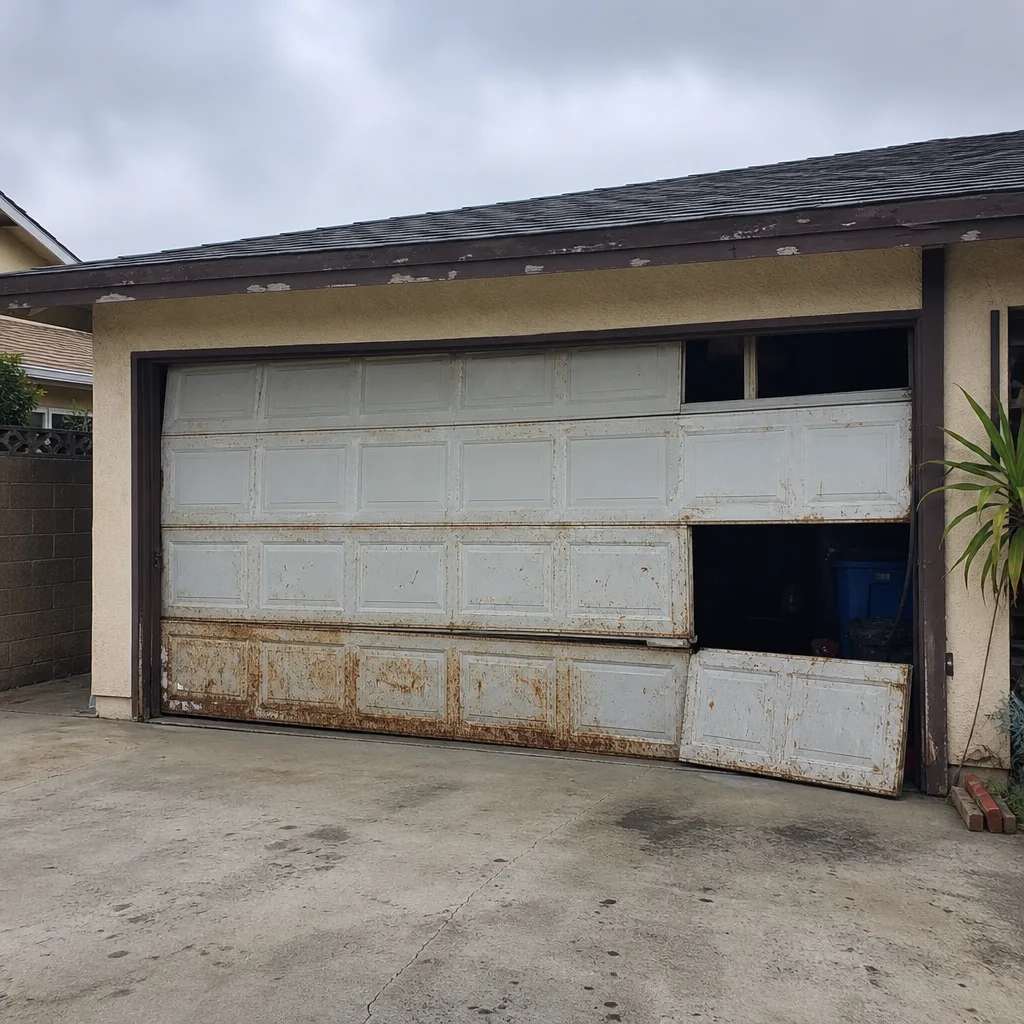
- Panel condition. If the panels are structurally sound and the damage is cosmetic, repair almost always wins. A single dented panel can often be replaced without touching the rest of the door, especially on Clopay and Amarr lines where individual sections are orderable. If bottom sections are rusting through at the weather seal, replacement of the whole door becomes the better math.
- Spring and hardware condition. A broken spring is a repair, not a door replacement, even on an older door. But if the spring has broken twice in five years, the door weight and balance are likely the root problem. At that point, a new door with a correctly matched spring system costs less over time than repeated repairs.
- Opener age. Openers have a service life, and an older unit with a worn gear or a failing logic board may be replaced for less than a year of intermittent repairs. If the door is fine and the opener is the problem, replacing only the opener makes sense. One visit covers both the door and the opener if both need work, which avoids the two-contractor problem.
Most garage door repairs in Lakewood are completed the same day, because the common failures, springs, cables, sensors, remotes, are parts a stocked truck carries. Installations, by contrast, are measured, quoted, ordered, and scheduled. The right question isn’t “which is cheaper today?” It’s “which fixes the problem for the longest stretch?” A written estimate sets the price before work starts either way.
Common Mistakes to Avoid
- Ordering a “standard” door without measuring. Lakewood’s 1950s tract openings are commonly 8 feet wide, not the 9 feet modern sellers call standard. A wrong-width door cannot be trimmed to fit.
- Ignoring headroom. A standard torsion spring setup needs about 12 inches above the opening. Many Lakewood garages have less, and forcing standard hardware into low headroom creates a dangerous spring arrangement and a door that binds.
- Skipping the HOA check. Replacing a door with a non-approved color or material in an HOA-governed Lakewood neighborhood typically triggers a notice to change it at your expense. The five-minute form is cheaper than a second door.
- Matching a heavy new door to an old opener. An original Chamberlain or Craftsman motor rated for a lightweight door will struggle with a new insulated steel or wood door. The opener fails early, and the door’s warranty doesn’t cover it.
- Attempting spring work without the right tools. Torsion springs hold enough tension to cause serious injury. In our experience, the homeowners who call us after a DIY attempt pay more than they would have paid for the initial repair, because the damage compounds.
- Choosing bottom-dollar on a shared-wall garage. The cheapest doors are also the thinnest, and on an attached Lakewood garage, every open and close transmits through the frame. A slightly thicker steel section makes a real difference in daily noise.
See the difference
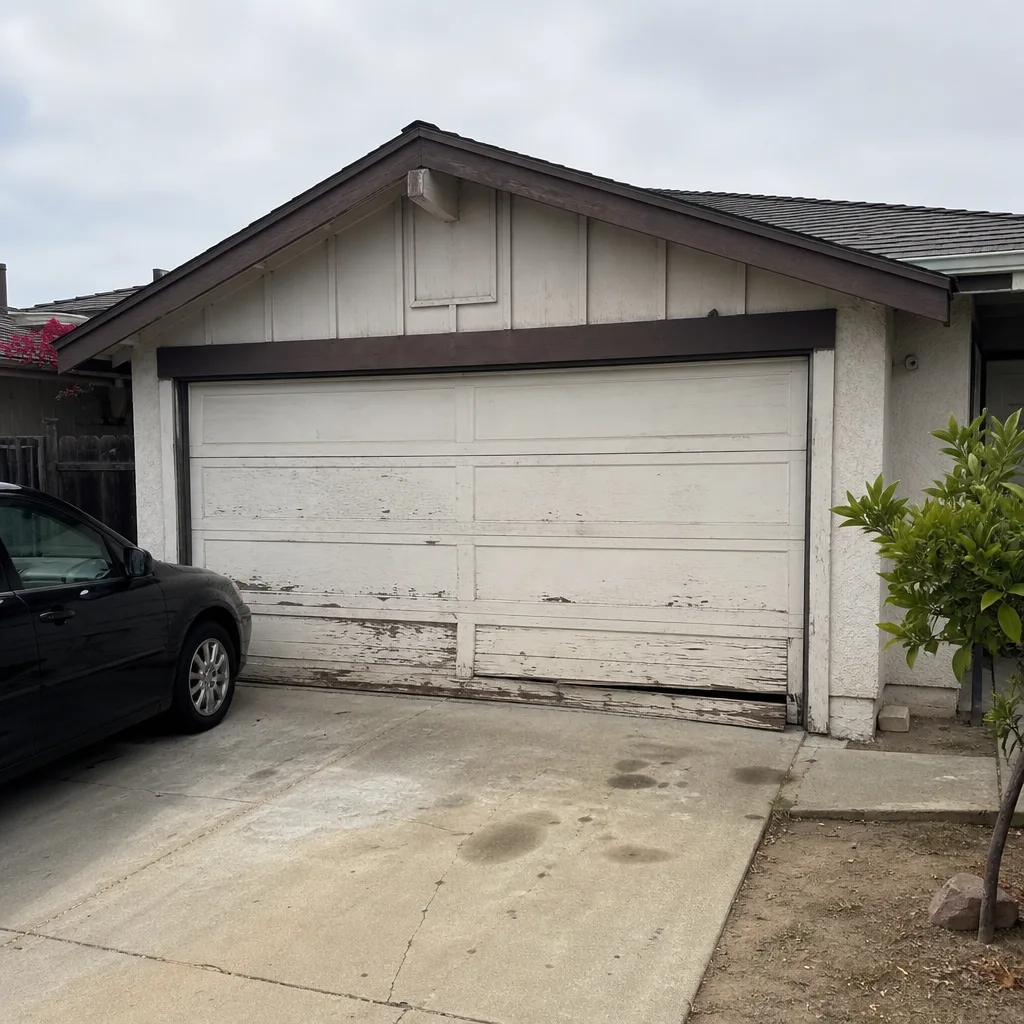 Before
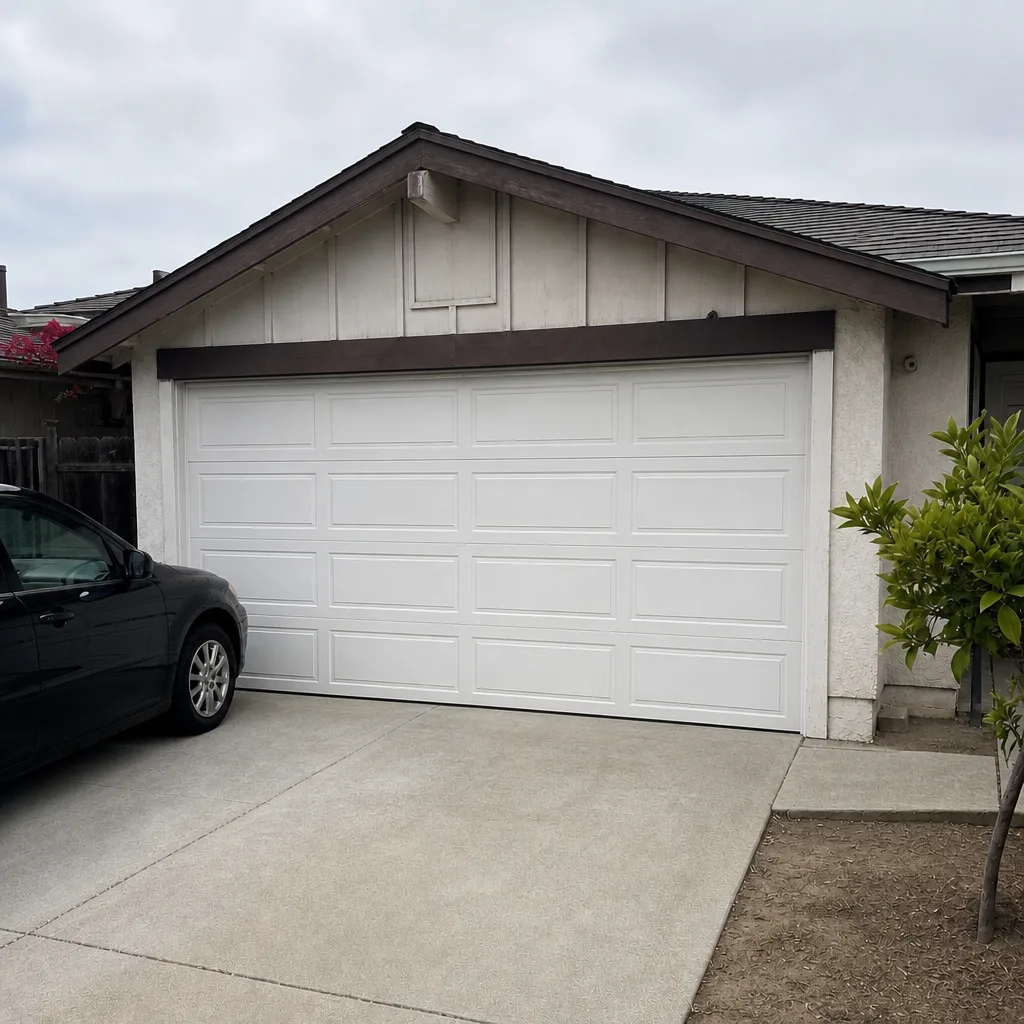 After
 Before
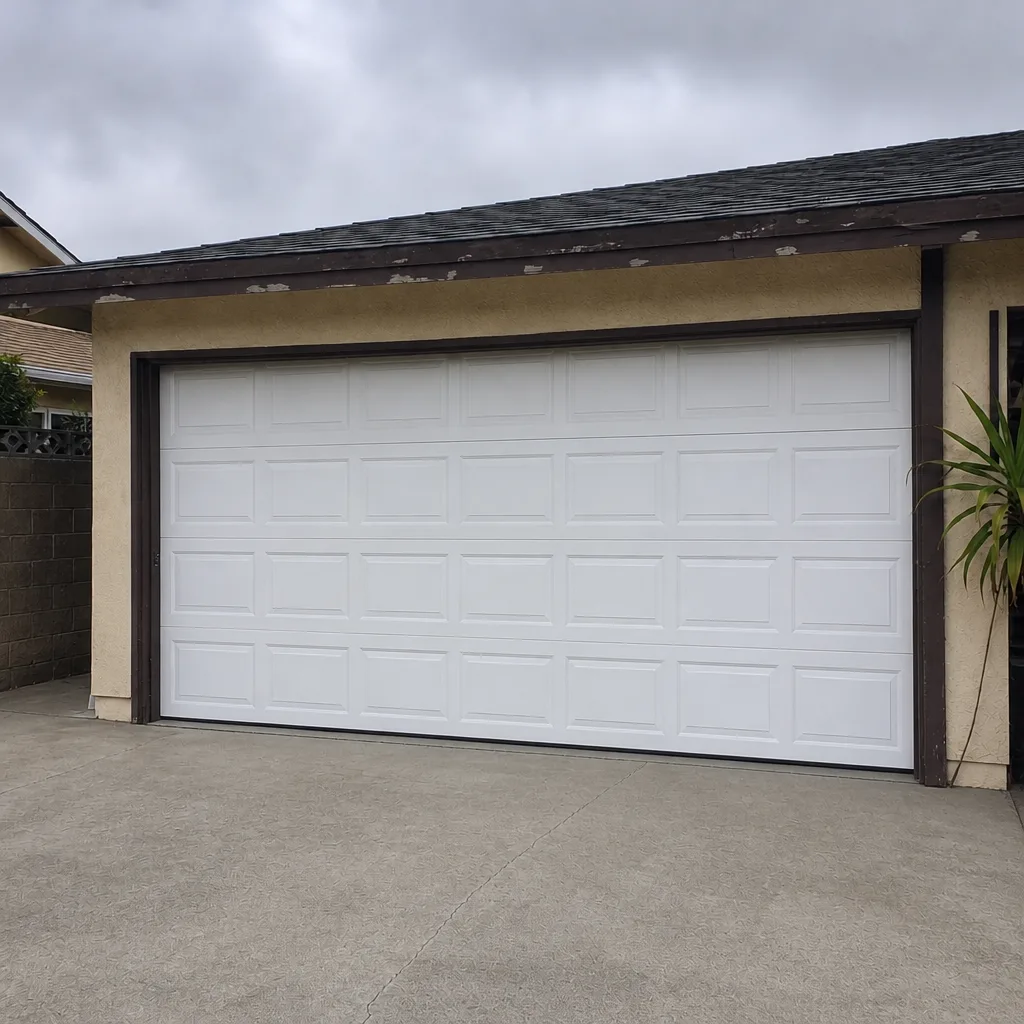 After
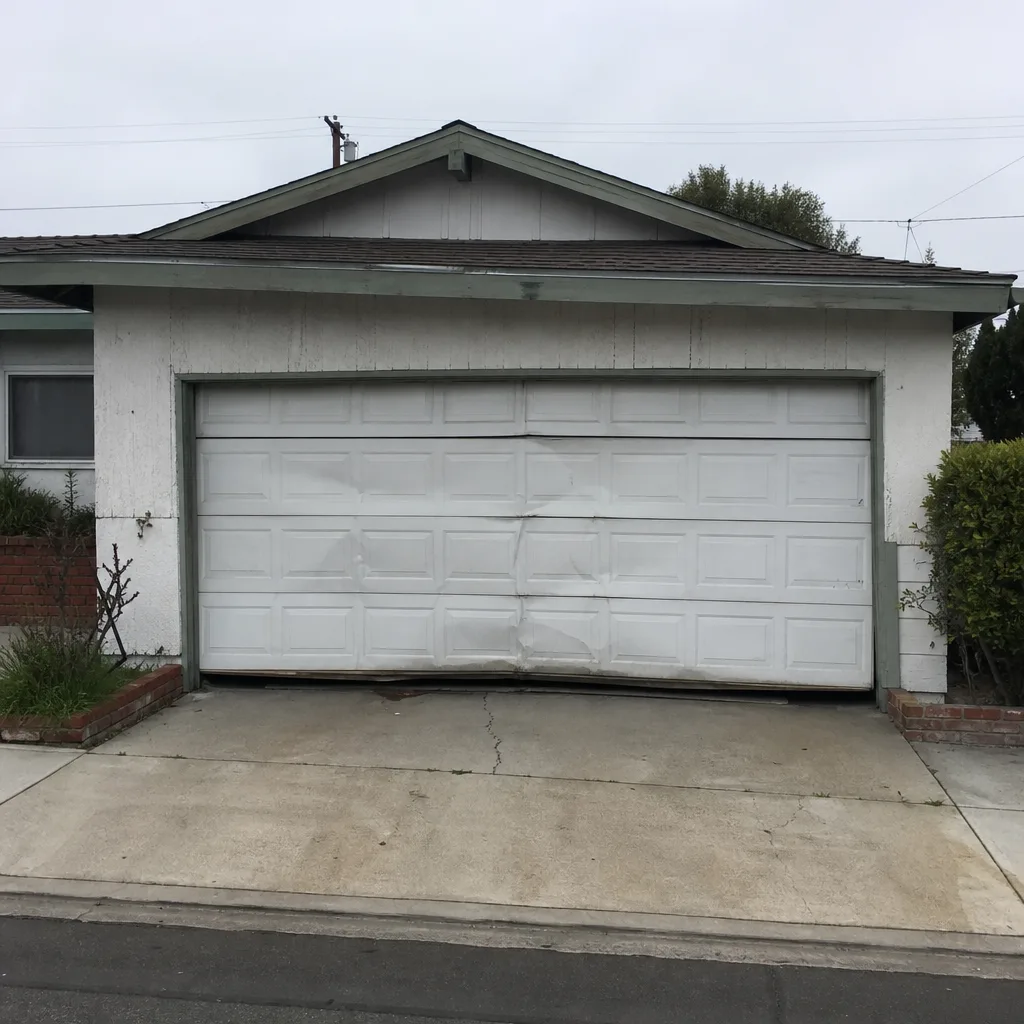 Before
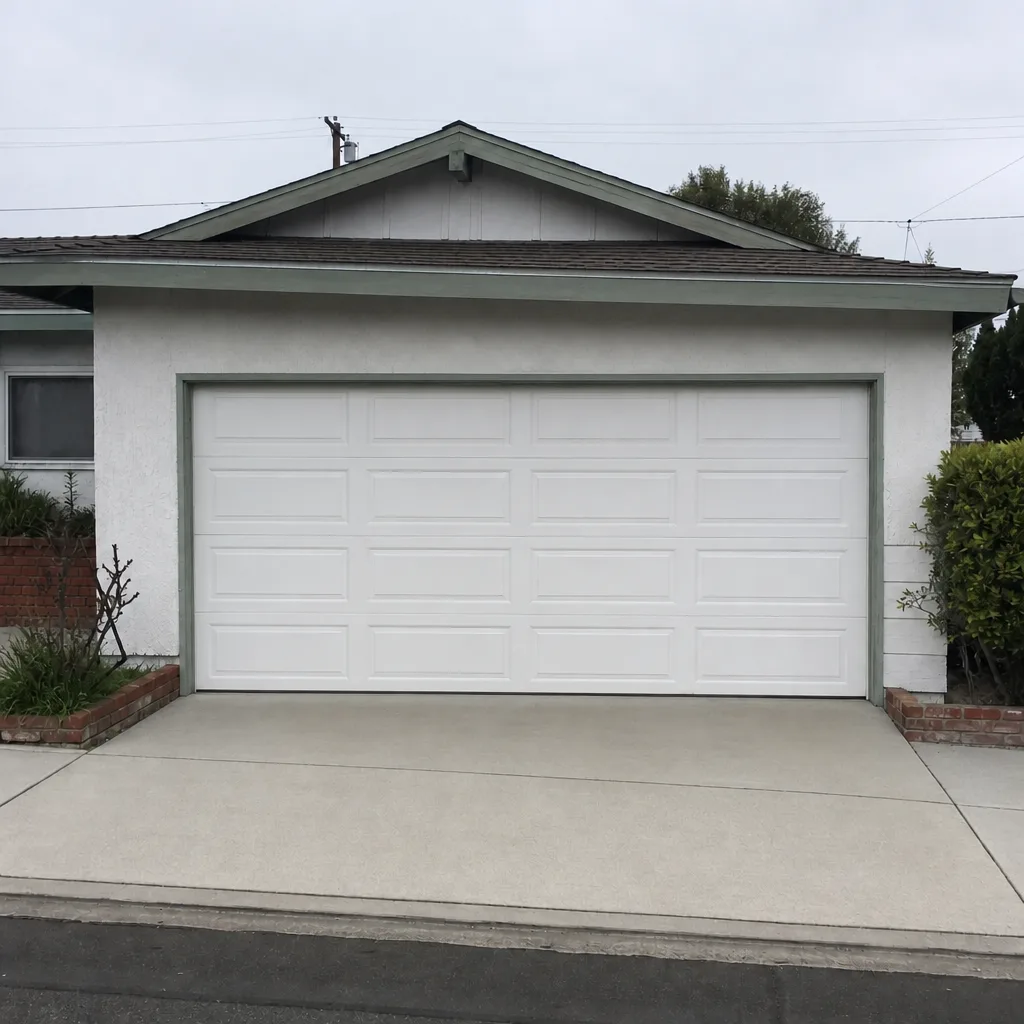 After
When to Call a Professional
A broken torsion spring, a cable off its drum, or a door that jumps the track are not projects to self-manage. The tension in a residential spring system is high enough to cause serious harm, and the tools to release that tension safely are specialized. A door that opens crooked, grinds in the track, or reverses without reason also needs a trained eye. What looks like a misaligned sensor may be a failing logic board. What feels like a heavy door may be a spring that’s lost its rating. If you’re not sure, call. Garage Door Service Lakewood offers free estimates in Lakewood, and the estimator will tell you without ambiguity whether the door should be repaired or replaced. Call (866) 596-9807.
Frequently Asked Questions
Older Lakewood tract homes from the 1950s and 1960s commonly have 8-foot-wide single-car openings, while modern homes and retrofits are more likely to use 9-foot doors. Measure the rough opening between the studs, not the trim, to know which one you have.
Many Lakewood neighborhoods operate under HOA rules that require architectural review before a garage door color or material change. Check your governing documents or call the management office to confirm what the approval form requires.
Yes, especially for Craftsman, Genie, LiftMaster, Chamberlain, Wayne Dalton, and Raynor openers, which are all common in Lakewood. Parts and remotes remain available for most older models, and a brand-agnostic technician can often fix the unit without replacing the whole system.
The cost depends on width, height, panel material, insulation, track configuration, and permit requirements. A straightforward steel single door replacement runs a different range than a custom wood or full-view aluminum door. Call (866) 596-9807 for a free estimate, and the written quote sets the final price before work starts.
No, the written estimate reflects what the technician sees on site, and the price is agreed before any work begins. If the opening needs reframing or low-headroom hardware, that’s identified during the estimate so the number on the quote is the number on the invoice.
For common failures, springs, cables, rollers, sensors, remotes, yes, the trucks are stocked for same-day repair in Lakewood. Call (866) 596-9807. We answer 24/7. Fast dispatch from 7am to 7pm, Sunday through Friday.
The Bottom Line
A garage door guide for Lakewood has to start with the housing stock, because the city’s postwar tract homes create constraints that generic guides miss. Headroom, side room, HOA rules, and permit jurisdiction all shape the decision before material and brand even come into it. The right door is the one that fits the opening you actually have, works with the opener you’re keeping or replacing, and passes the HOA review if one applies. The right approach is brand-agnostic, because Lakewood garages hold every major brand ever installed. If you need an assessment, call us at (866) 596-9807 for a free estimate.
Written by the team at Garage Door Service Lakewood, serving Lakewood since 2013.