
LiftMaster Garage Door Repair in Lakewood: A Homeowner’s Guide
LiftMaster’s 8500W wall-mount opener and their 84501 belt-drive share a brand name and almost nothing else mechanically. The diagnostic steps, failure points, and repair costs are completely different between them. If your LiftMaster opener is acting up in Lakewood, the first thing to figure out is which series you own, because that determines what’s likely wrong and what it’ll take to fix.
If you’d rather skip the troubleshooting and just get it working again, call Garage Door Service Lakewood at (866) 596-9807. We answer 24/7.
Key Takeaways
- LiftMaster openers fail differently by model line. Chain drives wear gears; wall-mounts develop tension arm problems; MyQ units reset their logic boards.
- The LED flash patterns on your opener are a diagnostic code, not random blinking. Each pattern points to a specific fault.
- MyQ connectivity issues are often router frequency problems (2.4GHz), not network signal issues.
- Some components are worth buying OEM. Others don’t need to be. Knowing which is which saves real money.
- The 50% rule is the cleanest way to decide between repair and replacement.
Know Your LiftMaster Series Before You Call Anyone
LiftMaster builds several residential opener families, and treating them as one product is the fastest route to misdiagnosis. A garage door repair visit in Lakewood goes faster when the homeowner can say what model is on the ceiling or wall. The model number is on a sticker near the power cord or the light cover.
The four models we see most often in Lakewood homes:
- LiftMaster 8365 (chain drive): a workhorse, but the drive gear is a known wear item. The nylon gear strips over years of use, and when it goes, the motor runs but the door doesn’t move. It’s a straightforward fix with the right gear kit.
- LiftMaster 84501 (belt drive): quieter than a chain drive and generally more reliable on the drive side. The failure we see is usually electrical, not mechanical: logic board glitches or capacitor issues as the unit ages.
- LiftMaster 8500W (wall-mount): the jackshaft design mounts beside the door instead of overhead. Its weak point is the tension arm and cable tension monitor. If the arm is out of adjustment, the opener thinks the door is off track and refuses to run.
- LiftMaster WLED (belt drive with integrated LED lighting): the lighting module is convenient but can fail independently of the drive. The opener keeps working while the lights stay dark or flicker, which confuses a lot of homeowners into thinking the whole unit is dead.
Each of these repairs is approachable, but the parts and procedures are not interchangeable. Bringing an 84501 diagnostic mindset to an 8500W means replacing parts that were never the problem.
How to Read LiftMaster’s LED Flash Codes
Every LiftMaster opener has a diagnostic LED on the back of the motor unit. When something stops working, the opener blinks a pattern, and that pattern is how the opener tells you what it thinks is wrong. Homeowners in Lakewood call us about this all the time, and the opener is usually right.
The key for any LiftMaster opener with a single logic board LED:
- One flash, then pause, repeating: a sensor obstruction. The photo eyes at the bottom of the door track are misaligned, blocked, or wired wrong. This is the most common code, and it’s often a leaf, a broom, or a shifted bracket. Check the little green and red lights on the sensors themselves: both should be lit and steady.
- Two flashes: the safety sensors report a wire short or reversed polarity. If the wires to one sensor are old cloth-insulated wire, that’s the usual culprit. The opener shuts down rather than risk closing the door without eyes.
- Four flashes: the opener’s motor thermal protection has tripped. This usually happens after several open and close cycles in a short time. Let it cool for fifteen minutes and try again. If it trips constantly after that, the motor is drawing too much current, and the unit needs real attention.
- Five flashes: a limit switch error. The opener has lost track of where the door’s up and down positions are. Clearing and resetting the limits with the adjustment controls sometimes works. If it recurs, the limit switches or the RPM sensor in the motor has worn out.
- Six flashes: somewhere the door is physically binding, and the opener’s force monitoring is stopping it rather than rip the door apart. A door that rolls stiffly, a broken garage door spring, or a misaligned track all cause this.
We want to be direct about what we can and can’t explain safely. The flash codes above describe what the opener is reporting. Diagnosing a six-flash condition sometimes means finding a broken spring under tension. If your door has a broken spring, that’s the point to stop and call someone. High-tension garage door springs can cause serious injury if handled wrong. Let a trained technician take it from there.
MyQ Problems Are Often a Router Frequency Issue, Not a WiFi Issue
Most MyQ troubleshooting advice stops at “check your WiFi.” That misses the actual problem in a lot of Lakewood homes. LiftMaster’s MyQ system, whether a built-in receiver on newer models or a separate hub on older ones, requires a 2.4GHz network. Many modern routers broadcast both 2.4GHz and 5GHz under one network name, and the opener keeps grabbing the 5GHz band, which it can’t use.
If the MyQ app says the opener is offline but the handheld remote works:
- Log into your router and split the bands. Give the 2.4GHz network a separate name and connect the opener to that one. This alone fixes a large share of Lakewood MyQ failures.
- Check for the opener’s own WiFi signal. An opener in pairing mode broadcasts a temporary network called MyQ-XXX. If the opener won’t pair, make sure your phone connects to that temporary network first, then return to the app to finish pairing.
- Confirm the hub, not the opener, if you have a separate MyQ hub. The hub has a pairing button, and the sequence is hub first, then opener, then phone. Doing it out of order fails silently and looks like a dead opener.
- Persistent failure after a clean pairing points to the logic board. The MyQ radio and logic board share a board, and two of the four main components on that board handle both functions. If that component fails, no router setting fixes it. The repair is board replacement.
One more LiftMaster quirk: MyQ units sometimes need a complete power-down reset to reconnect after a router firmware update or a power outage. Unplug the opener for sixty seconds, then plug it back in and reattempt pairing before assuming something is broken.
Genuine LiftMaster Parts vs. Aftermarket: Where to Be Careful
When you’re buying parts for a LiftMaster opener in Lakewood, some components are worth paying for the genuine article. Others are fine as generic substitutes. Mixing these up either wastes money or causes repeat failures.
Parts worth buying OEM:
- Logic boards: this is the brain of the opener. Generic replacement boards for LiftMaster models are rare, and they fail fast when they exist. The board’s firmware is specific to the model, and using the wrong board causes erratic limit behavior and sensor errors. Buy this from LiftMaster.
- Drive gears: the gear kit for the 8365 and other chain drives is a mechanical wear part, but it has to be precise. The OEM gear kit comes with the correct lubricant and spacers. Aftermarket gear kits are a roll of the dice we’ve watched fail within a year.
Parts where aftermarket is usually fine:
- Remote batteries: any reputable brand in the right voltage works. The opener doesn’t care who made the watch battery that powers the clicker.
- Safety sensor brackets: the mounting hardware for the photo eyes. Generic brackets hold the sensors in place without issue. The sensors themselves are worth buying from LiftMaster, but the metal that holds them isn’t.
- Remote control shells and visor clips: the external casing on hand remotes. Electronics vary; the plastic doesn’t.
One note on remotes: aftermarket universal remotes that claim LiftMaster compatibility sometimes work and sometimes don’t, depending on the year. LiftMaster has used rolling code technology since the mid-90s, and older universal remotes don’t always learn the newest rolling codes. If you’re replacing a full remote, a genuine LiftMaster or Chamberlain remote costs a little more and pairs the first time.
Repair or Replace: The 50% Rule, Applied to LiftMaster Openers
LiftMaster openers generally last an honest 10 to 15 years before the board, motor, or drive train starts spending more time apart than together. When one lands in front of us, the decision we help a Lakewood homeowner make is simple: total up the cost of the repair and compare it to half the cost of a new unit.
If the repair costs more than 50% of replacement, replace. If it’s less, repair. That’s the whole rule, and it’s the cleanest way to sidestep the emotional pull of “I already paid for this opener, so I want it fixed.”
Real examples of how that rule works:
- An 8365 with a stripped drive gear: the gear kit is not expensive, and the labor is moderate. The repair is well under half the cost of a new unit. Fix it.
- An 8500W with a failed logic board and a torn tension arm cable: those two parts together, plus labor, can approach the price of a new wall-mount opener. Replace.
- A 15-year-old chain drive that needs a new board, new gear, and has a rusting rail: each part is individually repairable, but the total crosses the line. Replace with something built for how the door is used.
This is where our brand-agnostic approach matters. When replace is the right answer, the question becomes: another LiftMaster, or something else? If the door is heavy or the garage is attached to the house, a belt drive or a wall-mount sits quieter. We work on LiftMaster, plus Chamberlain, Genie, Clopay, Amarr, Wayne Dalton, and Craftsman, so the conversation is about what fits the house, not what fits our inventory.
What a LiftMaster Repair Visit Actually Looks Like in Lakewood
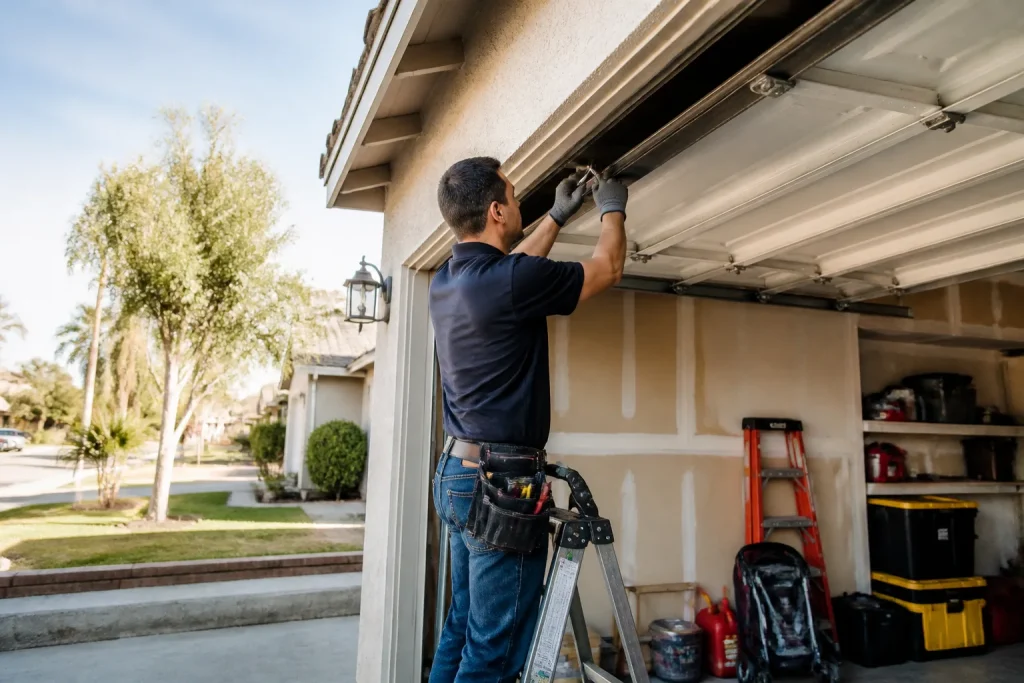
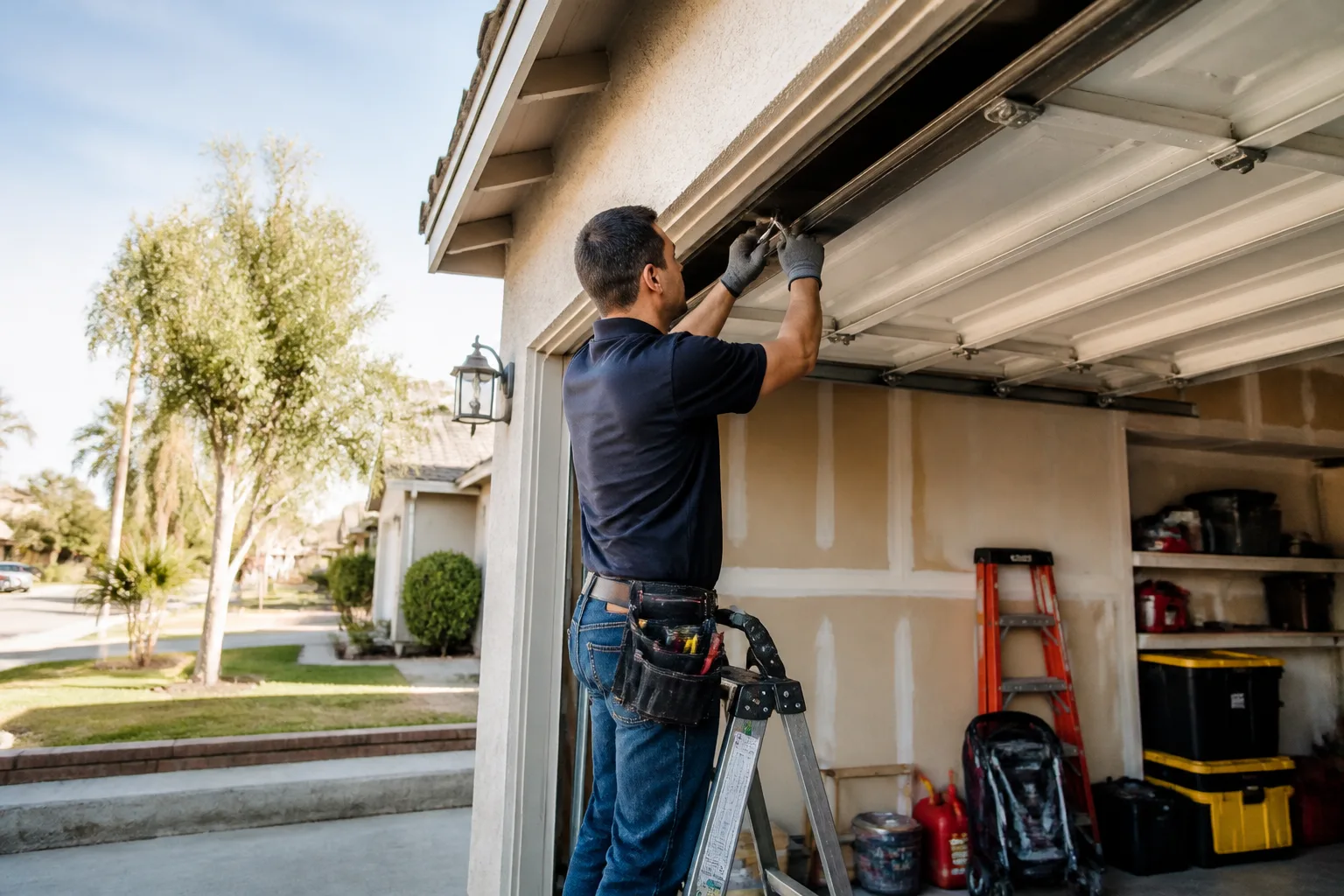
When you call for a LiftMaster repair, the visit is direct. Our technician arrives, asks what the opener is doing, and then checks the basics: power, the door’s balance, sensor alignment, and the flash codes. The door itself is checked every time, because an opener that’s failing to close is often reacting to a door that doesn’t roll correctly.
A typical visit covers both the opener and the door in one stop. That’s the full-system approach. If the problem is a broken spring and not the opener at all, that’s what we tell you. We’re not a LiftMaster-only dealer, and we’re not a garage door opener repair company that ignores the door. Both halves of the system matter.
For most LiftMaster repairs in Lakewood, the opener is back in service the same day. The common parts, including drive gear kits, sensors, and many boards for popular models, are stocked on the truck. It’s fast dispatch from 7am to 7pm, Sunday through Friday. We answer 24/7, so a call at any hour books into the next opening.
And the price is always set before work starts. You get a written estimate, you approve it, then we do the work. No surprises after the fact.
The Bottom Line
LiftMaster openers are common and generally dependable, but they’re not all the same machine. The 8365 strips drive gears, the 84501 develops board issues, the 8500W fights its tension arm, and the WLED loses its lights before anything mechanical fails. The LED flash codes tell you which one is happening. MyQ problems are usually a router band issue, not a dead opener. And when the repair bill crosses half the cost of a new unit, replacement is the financially sensible call.
If you’re in Lakewood and your LiftMaster is acting up, call Garage Door Service Lakewood at (866) 596-9807 for a free estimate. We answer 24/7. Fast dispatch from 7am to 7pm, Sunday through Friday. One visit covers the door and the opener.
Frequently Asked Questions
Typical LiftMaster repairs in Lakewood run from about $150 for a sensor replacement to $350 or more for a logic board replacement. The written estimate sets the final price before any work starts, and estimates are free. Call (866) 596-9807 for an exact quote on your model.
In most cases, yes. Common parts for popular LiftMaster models are stocked on the truck, so a fast dispatch from 7am to 7pm, Sunday through Friday, usually means same-day service. Call before the gates close at 7pm and we’ll do our best to get you back in service today.
That’s a diagnostic flash code, not a random light. One blink means a sensor obstruction, two blinks mean swapped or shorted sensor wiring, four blinks mean motor overheat, five blinks mean a limit switch error, and six blinks mean the door is binding. Check the flash pattern and match it to the code list above.
Use the 50% rule: if the total repair cost, parts and labor, exceeds half the cost of a new opener, replace. Under that line, repair. LiftMaster openers last 10 to 15 years, so a unit older than that with multiple simultaneous failures usually lands on the replace side.
Written by the team at Garage Door Service Lakewood, serving Lakewood since 2013.
Need Garage Door Help?
Call Garage Door Service Lakewood - licensed & insured, here with fast help in Lakewood.
(866) 596-9807